
Improvement Fatigue: When CI Becomes Too Much

When Continuous Improvement Starts Exhausting People
I’ve worked in process improvement long enough to notice something interesting.
Most employees don’t actually hate change.
What they hate is never getting a chance to catch their breath before the next change arrives.
And in 2026, I think a lot of organisations are hitting that wall.
A few years ago, “continuous improvement” sounded positive. Smarter systems. Less waste. Better workflows. More efficiency.
All good things.
But somewhere along the way, a lot of workplaces accidentally turned continuous improvement into continuous disruption.
New platforms.
New KPIs.
New reporting structures.
New workflows.
Another transformation project.
Another rollout.
Another workshop.
I was working with a manufacturing business in NSW recently that had spent years modernising operations. On paper, it was impressive — automation upgrades, ERP implementation, lean projects, reporting redesigns.
Individually, most initiatives actually worked.
But the workforce was exhausted.
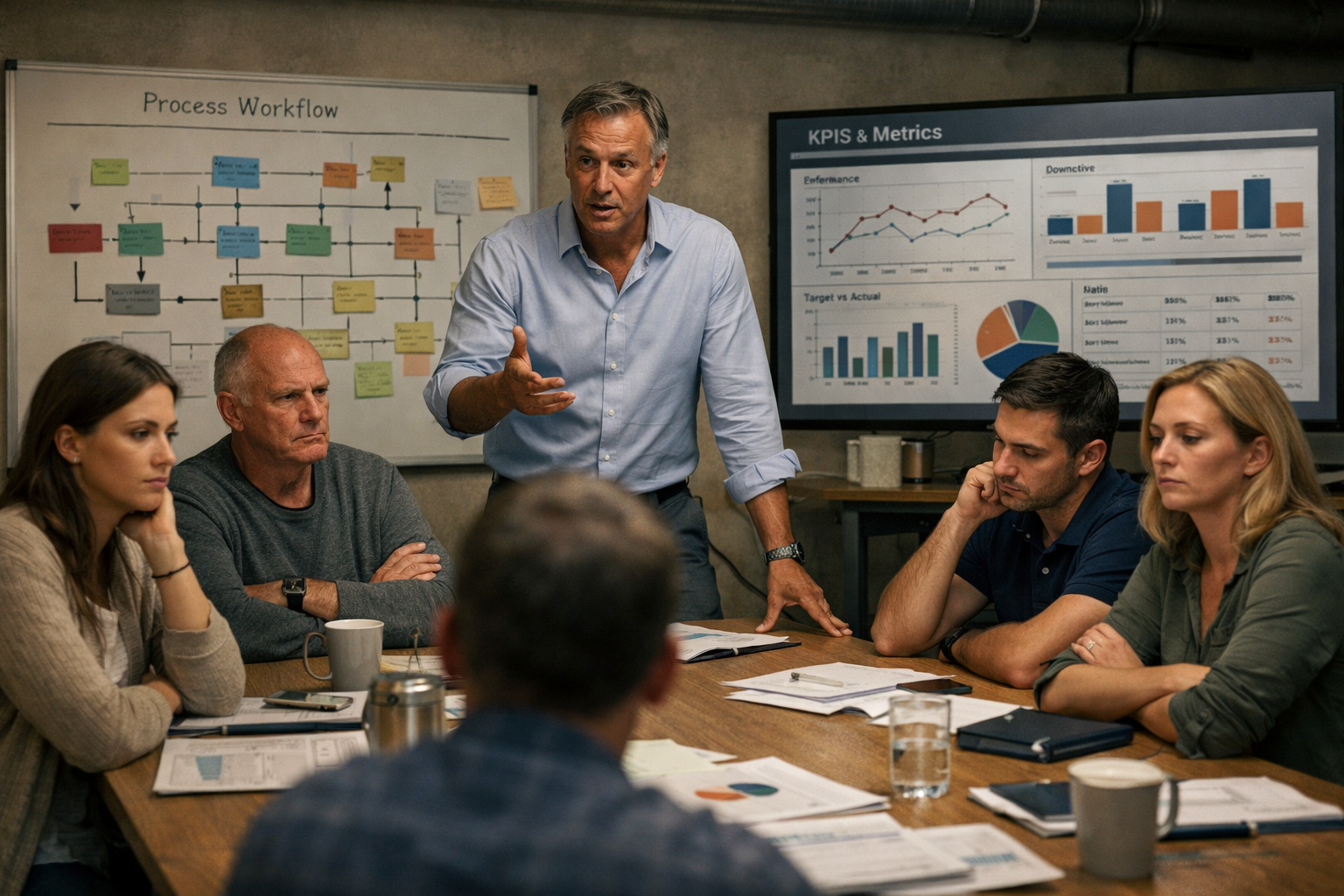
You could feel it in meetings. Nobody argued anymore. Nobody pushed back. But nobody leaned in either.
That’s usually the danger sign.
People assume resistance means fatigue. Honestly, I think quiet compliance is worse.
Employees stop believing anything will stay long enough to matter, so they emotionally detach from the process entirely.
One supervisor said something that stuck with me:
“We barely finish learning one system before another one turns up.”
And I think that’s the issue a lot of organisations are wrestling with now. Improvement was never meant to feel relentless.
The best operational environments I’ve seen still improve constantly — but they also create periods of stability. Time for people to actually settle into systems, build confidence, and let processes mature properly before the next wave hits.
Because humans can only absorb so much adaptation before performance starts becoming survival mode.
What’s tricky is that improvement fatigue often hides behind decent KPIs. Productivity might still look fine for a while. Projects still get completed.
But culturally, things shift:
- workshop participation drops
- cynicism increases
- improvement ideas dry up
- people stop engaging unless they absolutely have to
That’s usually not laziness.
It’s saturation.
I think process improvement leaders in 2026 need a different skill now — not just knowing what to improve, but knowing what to leave alone for a while.
Sometimes operational maturity comes from stabilising, not optimising.
Because if every month feels like another transformation program, eventually even good improvements start feeling like noise.


Have something to add?
Share your experience, perspective or thoughts on the topic below.