.png?width=1000&height=500&name=IPA%20Logo%20Transparent%20(Hi-Res).png)
The Hidden Cost of Clean Air
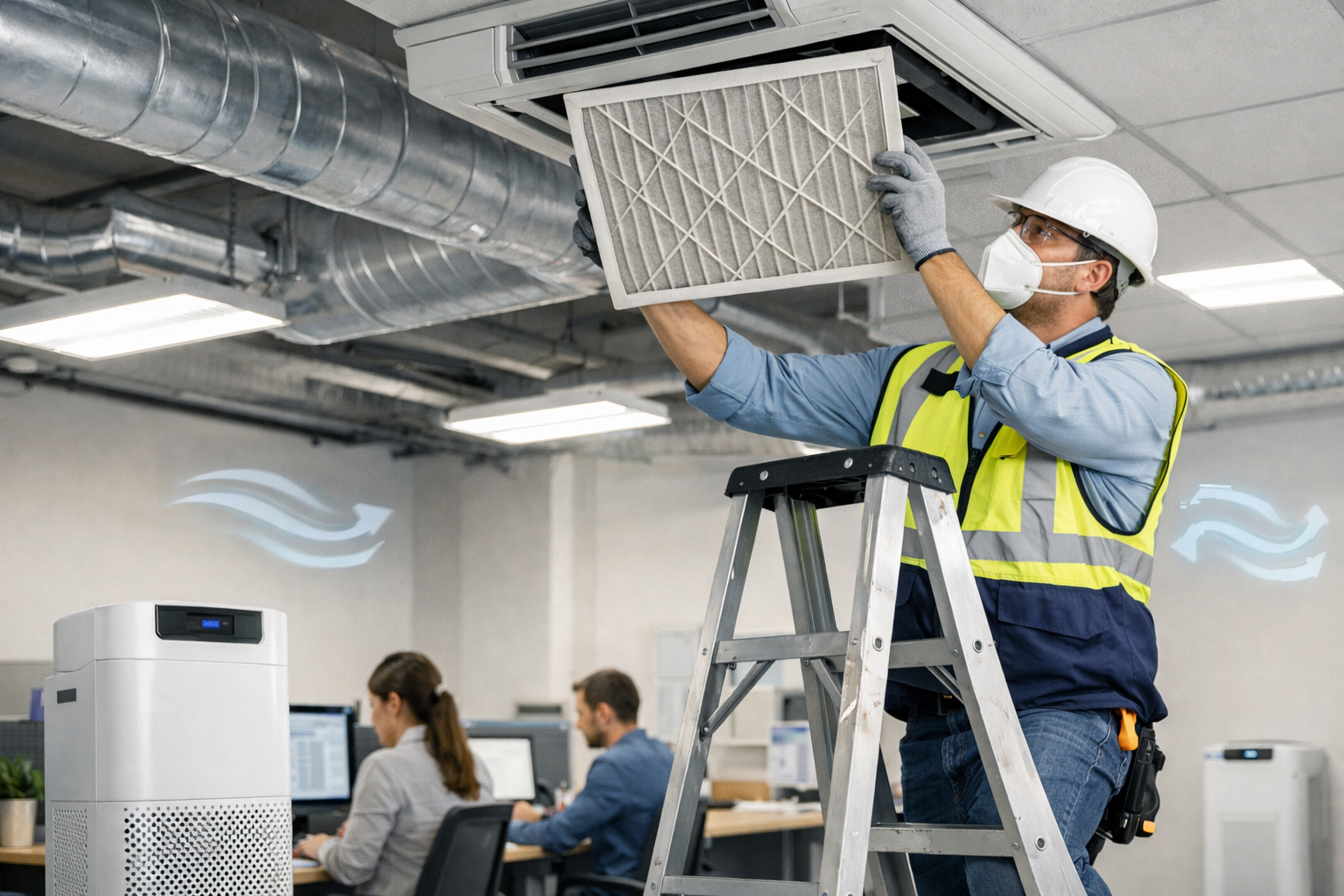
Balancing ventilation, purification, and workplace safety
Post-pandemic, indoor air quality (IAQ) has taken centre stage. NSW and QLD workplaces are investing in upgraded ventilation, air purifiers, and modern HVAC systems to reduce airborne pathogens and improve worker wellbeing.
However, these interventions come with hidden WHS implications. Noise, chemical off-gassing from filters, increased energy loads, and maintenance risks can create hazards if not carefully managed. HSE leaders must weigh the trade-offs between cleaner air and new workplace risks.
1. Understanding Indoor Air Quality Risks
While clean air reduces health hazards, it introduces secondary risks:
- Noise: High-capacity air purifiers or HVAC systems can exceed safe decibel levels
- Chemical Exposure: Off-gassing from new filters or cleaning agents
- Maintenance Hazards: Working at height or in confined spaces during system servicing
- Thermal Discomfort: Over-ventilation can create drafts, temperature fluctuations, or humidity issues
Ignoring these trade-offs can inadvertently replace one hazard with another.
2. Anonymised Example – Sydney Corporate Office
A QLD-based office upgraded HVAC systems and installed HEPA purifiers across open-plan areas.
Observed risks:
- Employees complained of loud fan noise disrupting concentration
- Maintenance staff reported mild respiratory irritation from new filters
- Airflow adjustments caused cold drafts along windowed walls
Mitigation actions:
- Noise-dampening baffles installed
- PPE introduced for maintenance staff during filter replacement
- Temperature zones adjusted to improve comfort
Result: cleaner air with controlled secondary risks, maintaining both health and productivity.
3. Conducting an IAQ Safety Audit
HSE leaders can proactively identify hazards linked to ventilation upgrades:
Indoor Air Quality Risk Checklist
- ✅ Measure decibel levels near purifiers and HVAC units
- ✅ Assess chemical exposure from filters or cleaning agents
- ✅ Review maintenance procedures for confined space or height risks
- ✅ Ensure thermal comfort and draft control for occupied areas
- ✅ Check emergency shutdown and access points
This ensures IAQ improvements do not compromise safety or wellbeing.
4. Balancing Trade-Offs
Practical strategies to balance benefits and risks:
- Noise Mitigation: Acoustic panels, vibration isolation, or lower fan speed during occupancy
- Chemical Safety: Use low-emission filters, ensure adequate PPE during maintenance, and ventilate areas during filter changes
- Ergonomics & Access: Safe ladders, scaffolding, or platforms for servicing HVAC units
- Communication: Educate staff about temporary discomforts during upgrades
HSE involvement during design and commissioning prevents unintended hazards.
5. Leading Indicators to Monitor
Track IAQ-related HSE risks using:
- Noise complaints or sound monitoring logs
- First aid incidents during maintenance
- Employee comfort surveys (temperature, airflow perception)
- PPE usage compliance during filter replacement
- Maintenance near misses or work-at-height incidents
Monitoring these indicators ensures early mitigation.
Final Thought
Cleaner air improves wellbeing—but not without trade-offs. HSE leaders must weigh benefits against secondary risks, embedding IAQ considerations into standard WHS procedures. When done right, post-pandemic air quality upgrades can enhance both health and safety.
Discussion Prompt
How has your workplace balanced air quality improvements with secondary WHS risks, and what strategies worked best?

Have something to add?
Share your experience, perspective or thoughts on the topic below.