.png?width=1000&height=500&name=IPA%20Logo%20Transparent%20(Hi-Res).png)
Invisible Hazards in Hybrid Workplaces
Managing HSE beyond the traditional site
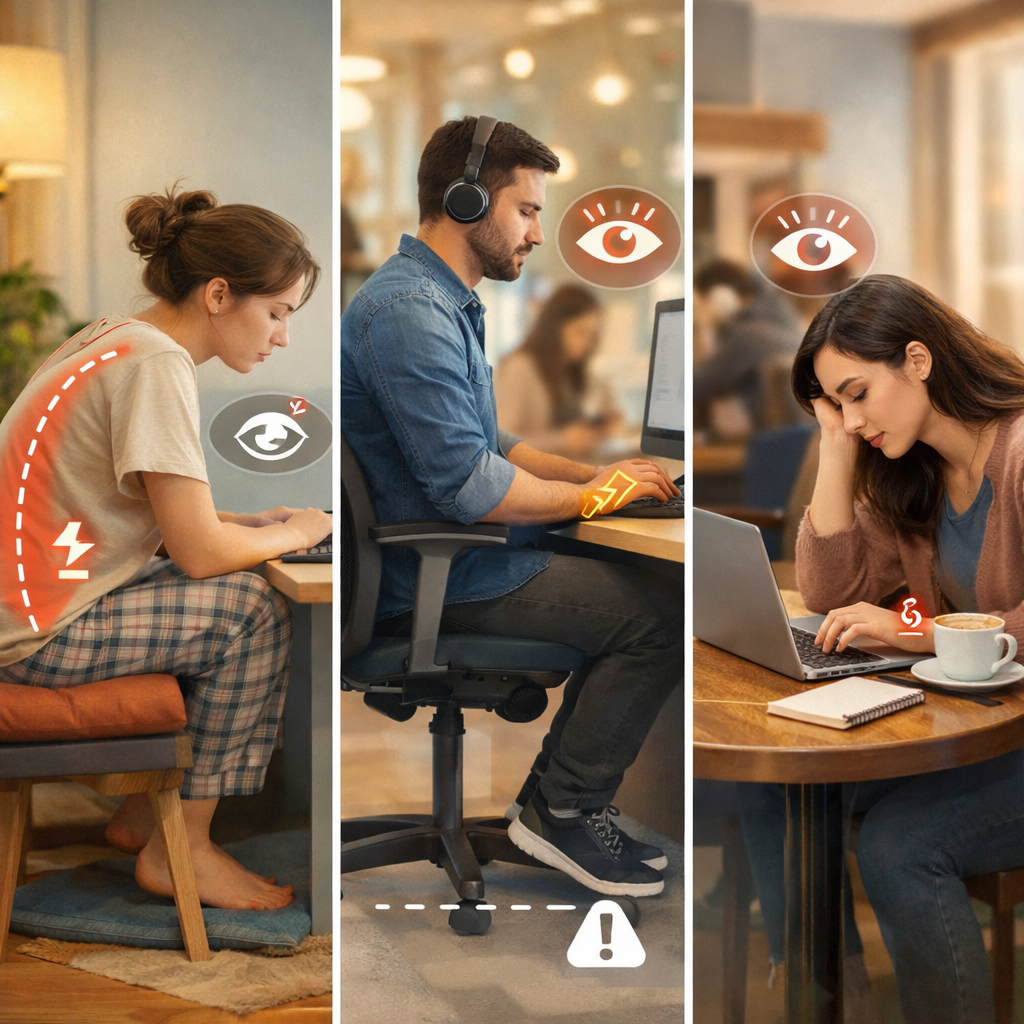
The modern workplace has expanded. In NSW and QLD, employees are no longer just on-site—they’re logging in from home offices, co-working spaces, or even local cafés. With this decentralisation, HSE risks have become invisible: poor ergonomics, blurred boundaries, isolation, and digital fatigue are affecting productivity, wellbeing, and compliance.
This blog explores how HSE leaders can audit, influence, and proactively manage hybrid work environments without overstepping or creating unnecessary intrusion.
1. Understanding Hybrid HSE Risks
Hybrid work introduces a new spectrum of hazards:
- Ergonomic risks: Improvised desks, kitchen chairs, or laptops on laps
- Psychosocial risks: Isolation, stress, or “always-on” pressure
- Environmental hazards: Poor lighting, temperature extremes, or slip hazards at home
- Digital fatigue: Long video calls, back-to-back meetings, reduced movement
These risks may not appear in traditional incident reports but can accumulate over time, impacting physical and mental health.
2. Anonymised Example – Sydney Technology Firm
A QLD-based engineering consultancy moved to a hybrid model in 2025. Initially, ergonomic issues went unnoticed—employees reported back pain, eye strain, and headaches. Simultaneously, managers noticed disengagement during virtual meetings.
Solution:
- Conducted voluntary home-office surveys
- Distributed ergonomic self-assessment checklists
- Introduced flexible micro-break policies
- Provided reimbursement for essential ergonomic equipment
Result: decreased musculoskeletal complaints and improved engagement in virtual collaboration.
3. Auditing the Invisible Workspace
HSE leaders can’t physically oversee every home or café setup—but frameworks exist for practical assessment:
Hybrid Workplace Audit Checklist
- ✅ Employee self-assessment of desk, chair, and monitor setup
- ✅ Lighting, ventilation, and temperature check
- ✅ Workload and break patterns reviewed for digital fatigue
- ✅ Access to secure network and privacy for confidential work
Voluntary audits, framed as wellbeing support, are more effective than mandatory inspections.
4. Educating and Empowering Employees
Instead of policing, HSE can empower hybrid workers:
- Share short videos on posture, stretching, and movement
- Provide guides for optimal home-office setup
- Encourage scheduling micro-breaks and “camera-off” periods
- Include mental health and psychosocial tips for isolation
Empowerment fosters ownership, reduces risk, and strengthens safety culture remotely.
5. Integrating Hybrid Risk into Existing Frameworks
Hybrid work doesn’t need a separate risk management system. Integrate invisible hazards into:
- Job hazard analyses (JHAs) for remote tasks
- Flexible work policies
- Ergonomic incident reporting
- Mental health and wellbeing programs
This ensures hybrid risk is treated with the same rigour as on-site HSE management.
6. Leading Indicators to Monitor
Track hybrid HSE risks using:
- Reports of musculoskeletal discomfort
- Employee self-assessment completion rates
- Feedback on digital fatigue
- Engagement metrics in virtual safety or wellbeing programs
- Uptake of ergonomic equipment or support
Early signals prevent long-term physical and psychosocial issues.
Final Thought
HSE in 2026 isn’t confined to the warehouse, site, or factory floor. Invisible hazards in hybrid environments are real and impactful. Proactive audits, education, and integration into standard safety frameworks ensure that safety culture follows employees wherever they work.
Discussion Prompt
How has your organisation identified or mitigated hybrid work hazards—and which strategies have been most effective?


Have something to add?
Share your experience, perspective or thoughts on the topic below.